The Empire That Became a Mid-Sized Republic
Austria’s modern reality — a small, prosperous, alpine federal republic of 9 million people — sits awkwardly with its historical reality as the seat of the Habsburg Empire, which from 1273 until 1918 ruled territories spanning Spain, the Low Countries, the Holy Roman Empire, the Italian Renaissance courts, and most of Central Europe. At its 19th-century peak, the Austro-Hungarian Empire was the third most populous European state, ruling over 50 million people across what is now Austria, Hungary, the Czech Republic, Slovakia, Slovenia, Croatia, parts of Italy, parts of Romania, parts of Poland, and parts of Ukraine.
That historical compression — from imperial capital to mid-sized republic in less than a century — has produced a country that is constantly negotiating between its outsized cultural infrastructure and its modest contemporary scale. Vienna, designed for an empire of 50 million, now serves a country of 9 million; the result is a level of cultural infrastructure (the State Opera, the Musikverein, the Kunsthistorisches Museum, the Spanish Riding School) per capita that few other European cities approach.
The country has built a comfortable post-imperial identity around alpine tourism, classical music heritage, a strong social-market economy, and the Schmäh — a distinctive Viennese sensibility combining black humour, fatalism, and the comfort of well-developed cafés.
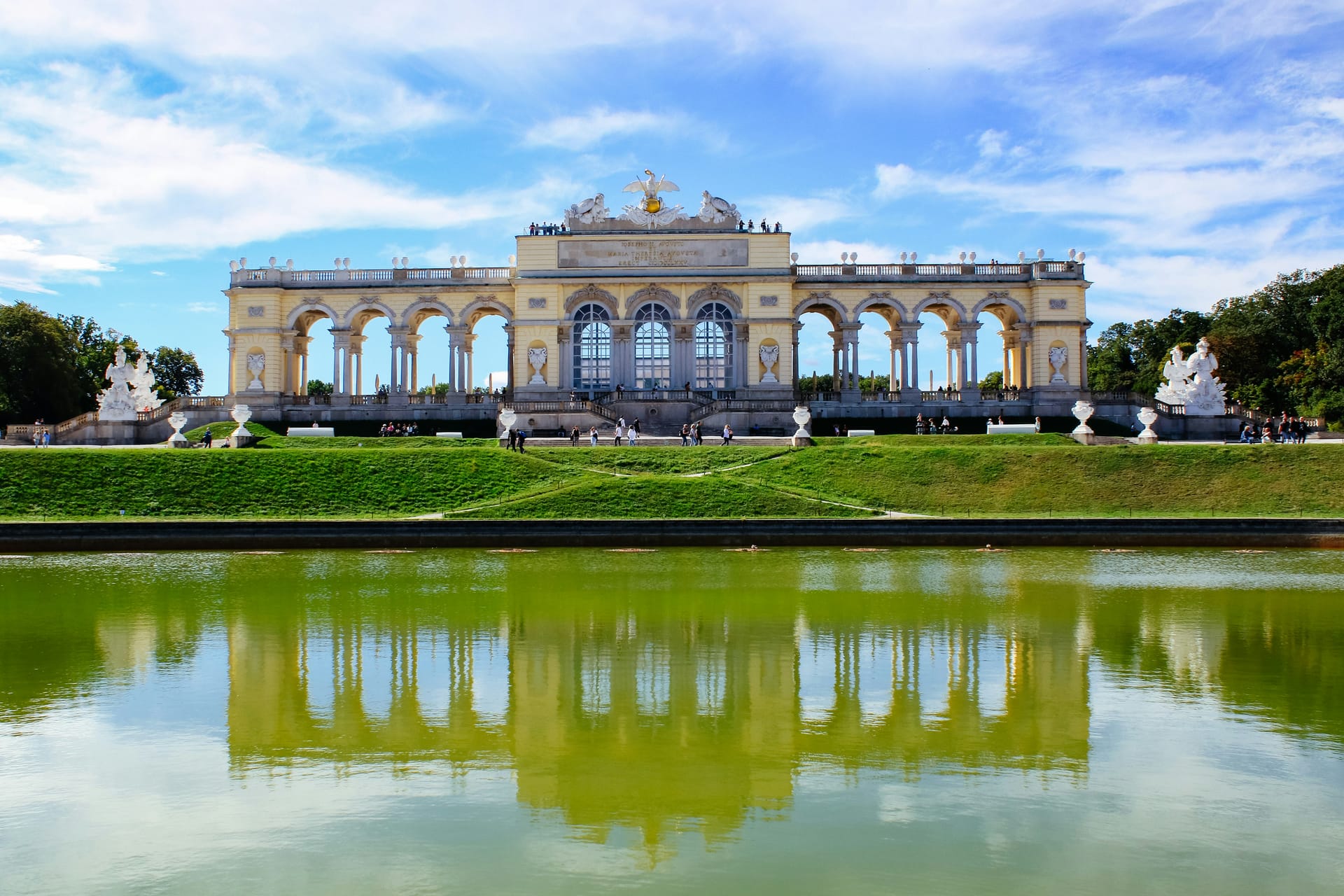
A Brief History
The Habsburg Centuries
Austrian history is, more than any other European country’s, the history of a single dynasty. The Habsburgs acquired the Duchy of Austria in 1278 and held it for 640 years. Through marriage, war, and diplomacy, they became Holy Roman Emperors (almost continuously from 1438 to 1806), Kings of Spain (1516-1700), Kings of Hungary, Kings of Bohemia, and rulers over much of Italy.
The 19th Century
The Austrian Empire was reorganised as the Dual Monarchy of Austria-Hungary in 1867, recognising Hungarian autonomy under the same crown. Vienna became one of Europe’s great cultural capitals — Brahms, Mahler, Bruckner, the early Schoenberg, Klimt, Schiele, Freud, Wittgenstein all worked here. The empire’s collapse in 1918 was triggered by World War I, which had begun with the assassination of Archduke Franz Ferdinand in Sarajevo.
The Inter-War and Nazi Period
The First Austrian Republic (1919-1934) struggled with economic crisis and political polarisation. Austria was annexed by Nazi Germany in the 1938 Anschluss — celebrated by significant Austrian crowds despite later post-war narratives portraying Austria as Hitler’s “first victim”. The country was extensively complicit in Nazi crimes; Austrian Jews were systematically persecuted and murdered.
Post-War
Austria was occupied by Allied forces (Soviet, US, British, French) from 1945 to 1955, when the State Treaty restored full sovereignty in exchange for permanent neutrality. The Second Republic has been one of Europe’s most politically stable democracies since.
Austria joined the EU in 1995, adopted the euro in 1999/2002, and remains militarily neutral but participates in EU defence cooperation.
Geography and Climate
Austria covers 83,879 km² — about the size of South Carolina — and is roughly 65% mountainous (the Eastern Alps). The country borders Germany, Czech Republic, Slovakia, Hungary, Slovenia, Italy, Switzerland, and Liechtenstein.
Regional Geography
- Vienna and the East — flatter Pannonian plain, the Danube, the country’s economic heart.
- The Alps — covering most of the western and southern country. Grossglockner (3,798 m) is the highest peak.
- Salzburg and the Salzkammergut — the lake district immortalised in The Sound of Music.
- Tyrol — Innsbruck, the iconic Alpine state, host of the 1964 and 1976 Winter Olympics.
Climate
Austria has a continental climate with cold winters and warm summers. The Alps create significant local variation; lower-elevation Vienna averages 25°C in July and 0°C in January.
Culture and Society
The Coffee House Culture
The Viennese coffee house was added to UNESCO’s Intangible Cultural Heritage list in 2011. Coffee houses (Café Central, Café Sperl, Café Hawelka, Café Landtmann) function as living rooms — a customer can sit for hours over a single Melange (espresso with steamed milk) reading newspapers (provided free), with no expectation of further ordering. The tradition emerged in the late 17th century after the Ottomans abandoned coffee beans during the failed siege of Vienna in 1683.
Religion
Austria is approximately 57% Catholic, 3% Protestant, 8% Muslim (mostly Turkish and Bosnian heritage), with about 27% unaffiliated.
The Economy
Austria has a high-income, export-oriented economy (~$520 billion GDP in 2024) — heavily integrated with Germany. Key sectors:
- Tourism — around 50 million overnight stays annually (a 5:1 visitor-to-resident ratio); ski tourism is particularly important
- Manufacturing — Voestalpine (steel), AVL (engineering), Andritz (industrial machinery), KTM (motorcycles)
- Banking — strong presence in Central and Eastern European markets through Erste Group, Raiffeisen
- Energy — significant hydroelectric production (~60% of electricity is renewable)
Cuisine
Austrian cuisine reflects the imperial multinational heritage with strong Hungarian, Bohemian (Czech), and Italian influences:
- Wiener Schnitzel — breaded thin veal cutlet, the national dish
- Tafelspitz — boiled beef with horseradish and apple sauce, Emperor Franz Joseph’s reportedly favourite dish
- Sachertorte — chocolate cake with apricot jam, invented at Vienna’s Hotel Sacher in 1832
- Apfelstrudel — apple strudel, the iconic Viennese dessert
- Kaiserschmarrn — caramelised pancake “imperial mess” served with stewed fruit
- Knödel — bread or potato dumplings, often served with goulash
Nature and UNESCO Sites
Austria has 12 UNESCO World Heritage Sites, including Vienna’s Historic Centre, Schönbrunn Palace, the Salzburg historic centre, the Hallstatt-Dachstein/Salzkammergut cultural landscape, the Wachau valley, and the Semmering Railway (the world’s first standard-gauge mountain railway).
Travel Guide
Entry
Schengen visa-free for 90 days for most Western visitors.
Best Seasons
- June-September — hiking, lake season, music festivals (Salzburg Festival in July-August)
- December — Christmas markets across the country (Vienna’s are particularly famous)
- December-March — ski season in Tyrol, Salzburg, and Vorarlberg
Transport
ÖBB trains connect everything; the Railjet high-speed services link Vienna, Salzburg, Innsbruck, and Graz. Vienna has an excellent metro and tram network.
Surprising Facts
- Austria has produced fourteen Nobel laureates — a high count relative to population.6
- The Austrian flag dates from 1230, making it one of the oldest national flags still in use.6
- Vienna’s central cemetery (Zentralfriedhof) houses the graves of Beethoven, Brahms, Schubert, Strauss (both father and son), Schoenberg, and many other major composers — and is reportedly home to about 3 million graves, more than the city’s living population.6
- Austria’s Sound of Music is essentially unknown locally — the 1965 film is a North American cultural phenomenon, but Austrians often profess never to have seen it.3
- The Vienna Boys’ Choir has been in continuous operation since 1498.6
- Vienna ranks first or near-first globally in quality-of-life surveys (Mercer, Economist Intelligence Unit) — a position it has held consistently for two decades.3
Sources and References
See the list of cited sources in the page frontmatter — UNESCO, World Bank, Austria Tourism, Statistik Austria, Oesterreichische Nationalbank, and Encyclopaedia Britannica.