The Carpathian Heart of Central Europe with a Language Like No Other
Hungary is, linguistically, the strangest major European country. Hungarian (Magyar) is part of the Uralic language family — related to Finnish and Estonian (distantly), but unrelated to any of the Slavic, Germanic, or Romance languages that surround it. The Magyars arrived in the Carpathian Basin from the Ural region around 895 AD, conquered the territory from earlier inhabitants, and established a kingdom that has dominated central European politics ever since.
The country’s modern political and economic story has been one of repeated catastrophic loss followed by slow recovery. Hungary lost roughly two-thirds of its territory and three-fifths of its population in the 1920 Treaty of Trianon that followed WWI — a national trauma still discussed daily in Hungarian politics. WWII brought Nazi alliance, then Holocaust (over 500,000 Hungarian Jews killed), then Soviet occupation. The 1956 Hungarian Revolution against Soviet rule was crushed in twelve days. The country emerged from Communism in 1989 and joined NATO (1999) and the EU (2004).
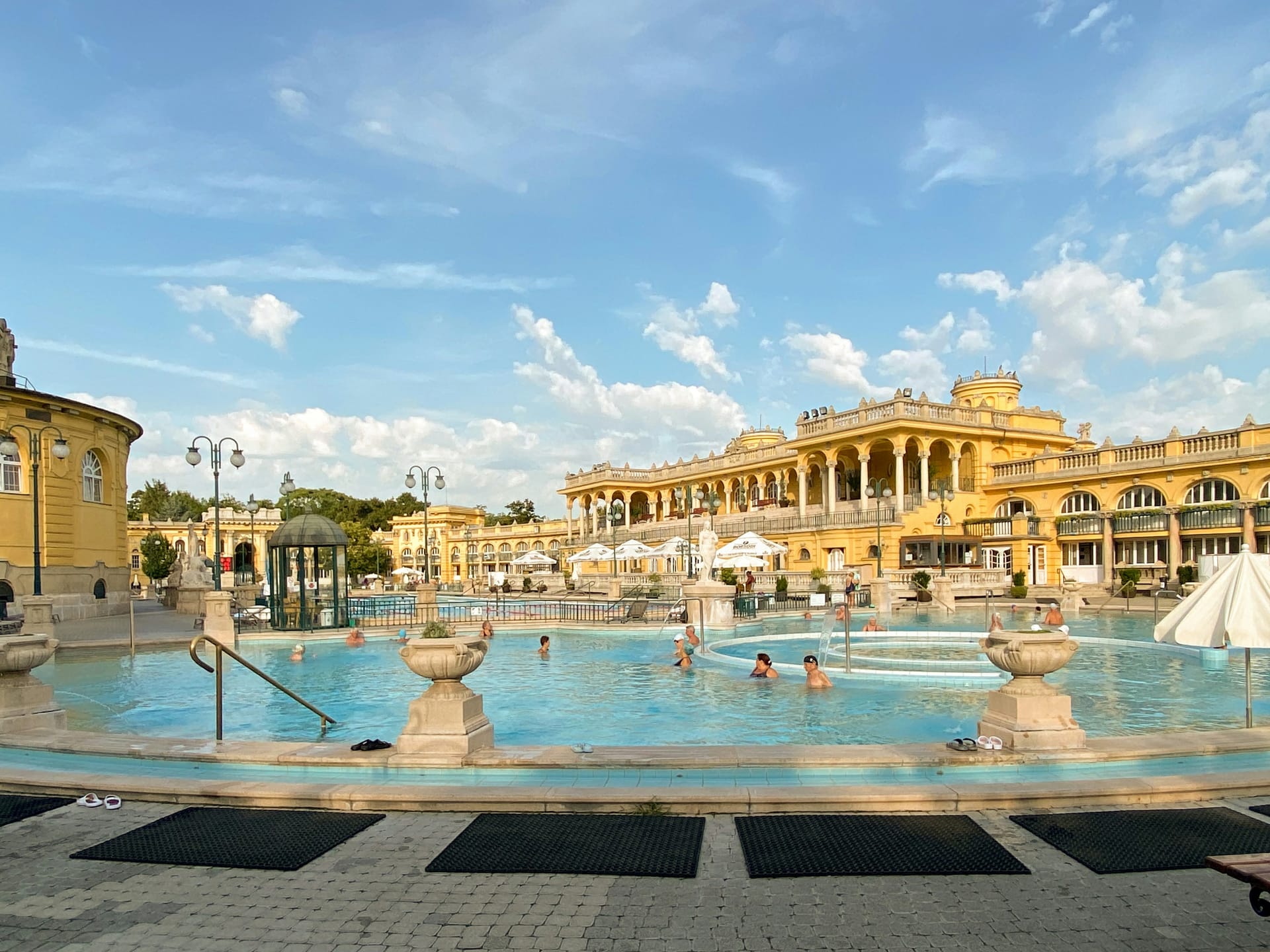
Modern Hungary is one of the EU’s most politically distinctive members — Prime Minister Viktor Orbán’s Fidesz party has held power continuously since 2010, pursuing an agenda branded “illiberal democracy” that has drawn frequent EU sanctions and made Hungary one of Brussels’s most consistent political problem cases. The country remains a major tourism destination, particularly through Budapest’s exceptional architectural heritage and thermal baths.
A Brief History
The Kingdom of Hungary
The Magyar tribes arrived in the Carpathian Basin around 895 AD. King Stephen I (István, 997-1038) Christianised Hungary and established the kingdom’s foundational structure. Medieval Hungary was a major Central European power, including significant Croatian and Slovak territory.
Ottoman and Habsburg Rule
The 1526 Battle of Mohács ended Hungarian independence — the country was divided between the Ottoman Empire (central Hungary) and the Habsburgs (Royal Hungary in the north and west). Habsburg consolidation followed the 1683-1699 reconquest from the Ottomans.
Austria-Hungary
The 1867 Compromise created the Austro-Hungarian Dual Monarchy, recognising Hungarian autonomy under Emperor Franz Joseph (who was simultaneously King of Hungary). Budapest experienced extraordinary growth — the 1896 millennium celebrations marked the height of Hungarian imperial confidence.
Trianon
WWI defeat and the Treaty of Trianon (1920) stripped Hungary of two-thirds of its pre-war territory and three-fifths of its population, leaving substantial Hungarian minorities in Romania (Transylvania), Slovakia, Serbia (Vojvodina), and Ukraine. “Trianon” remains the central trauma of Hungarian historical memory.
WWII and Soviet Era
Hungary allied with Nazi Germany in WWII; the Holocaust killed approximately 565,000 Hungarian Jews, mostly in 1944 after the German occupation. The country fell under Soviet control from 1947. The 1956 Hungarian Revolution — a popular uprising against Soviet rule — was crushed by Soviet military intervention in twelve days; an estimated 200,000 Hungarians fled the country.
Modern Hungary
Hungary’s transition from Communism in 1989 was peaceful — the country was actually the first to begin physically dismantling the Iron Curtain (cutting through the border fence with Austria in May 1989). Hungary joined NATO (1999) and the EU (2004).
Since 2010, Viktor Orbán’s Fidesz party has dominated Hungarian politics with policies emphasising national sovereignty, anti-immigration positions, conservative cultural policy, and increased media and judicial control — drawing frequent criticism from EU institutions.
Geography and Climate
Hungary covers 93,030 km² — about the size of Indiana — and is mostly low plains (the Great Hungarian Plain in the east) with low mountains in the north and west. Lake Balaton in the west is Central Europe’s largest lake (594 km²). The Danube flows through Budapest dividing the city into Buda (west, hilly) and Pest (east, flat).
Culture, Language and Religion
Hungarian is famously difficult — agglutinative grammar, 18 grammatical cases, vowel harmony, and a vocabulary unrelated to Indo-European languages. Hungarian is written with a Latin-based alphabet plus several diacritics.
Hungary is approximately 40% Catholic, 15% Reformed (Calvinist), with significant unaffiliated population. The Hungarian Reformed Church is one of the world’s larger Calvinist communities outside the Netherlands.
Hungarian cultural exports include composers (Liszt, Bartók, Kodály), filmmakers (Béla Tarr, István Szabó), authors (Sándor Márai, Imre Kertész — Nobel laureate), the Rubik’s Cube (invented by Ernő Rubik in 1974), and disproportionate Olympic success in fencing, water polo, and modern pentathlon.
The Economy
Hungary has a mixed economy (~$220 billion GDP in 2024). Key sectors: automotive manufacturing (Audi, Mercedes-Benz, Suzuki, BMW), electronics, pharmaceuticals (Gedeon Richter), agriculture, and tourism.
Cuisine
Hungarian food is paprika-driven and one of Europe’s most distinctive regional cuisines:
- Goulash (gulyás) — beef and vegetable stew with paprika, the national dish (note: Hungarian goulash is a soup, not the thick stew sold internationally)
- Pörkölt — meat stew with paprika
- Lángos — deep-fried flatbread, the standard street food
- Tokaji wine — sweet dessert wines from northeastern Hungary, historically known as “the wine of kings”
- Pálinka — fruit brandy distilled from plums, apricots, pears
- Dobos torte and Esterházy torte — classical Hungarian layer cakes
Nature and UNESCO Sites
Hungary has 9 UNESCO World Heritage Sites, including the Banks of the Danube, Buda Castle Quarter and Andrássy Avenue in Budapest, Hortobágy National Park (the Puszta plains), Hollókő (a preserved traditional village), and the Tokaj wine region.
Travel Guide
Entry & Best Seasons
Schengen visa-free 90 days. April-October for general visits; summer for Lake Balaton; winter for thermal baths.
Budget
Affordable — daily mid-range €60-€100.
Surprising Facts
- Hungary has won more Olympic gold medals per capita than any other country (excluding microstates) — particularly strong in fencing, swimming, and water polo.3
- The Rubik’s Cube was invented in 1974 by Hungarian architect Ernő Rubik as a teaching tool for spatial relationships; it has sold over 450 million units globally.3
- Hungarian is famously the most difficult European language for English speakers to learn, ranking with Mandarin, Arabic, and Japanese in the US Foreign Service Institute’s hardest-language category.3
- Budapest has been ranked among Europe’s most beautiful capital cities consistently — it was created in 1873 by merging Buda, Óbuda, and Pest into a single municipality.6
- The biro ballpoint pen was invented by Hungarian journalist László Bíró in 1938 and patented in 1941.6
- Hungary has more Olympic gold medals than India, despite India having 130 times Hungary’s population.3
Sources and References
See the list of cited sources in the page frontmatter.