A 1,777-Kilometre Adriatic Coastline with Over 1,200 Islands
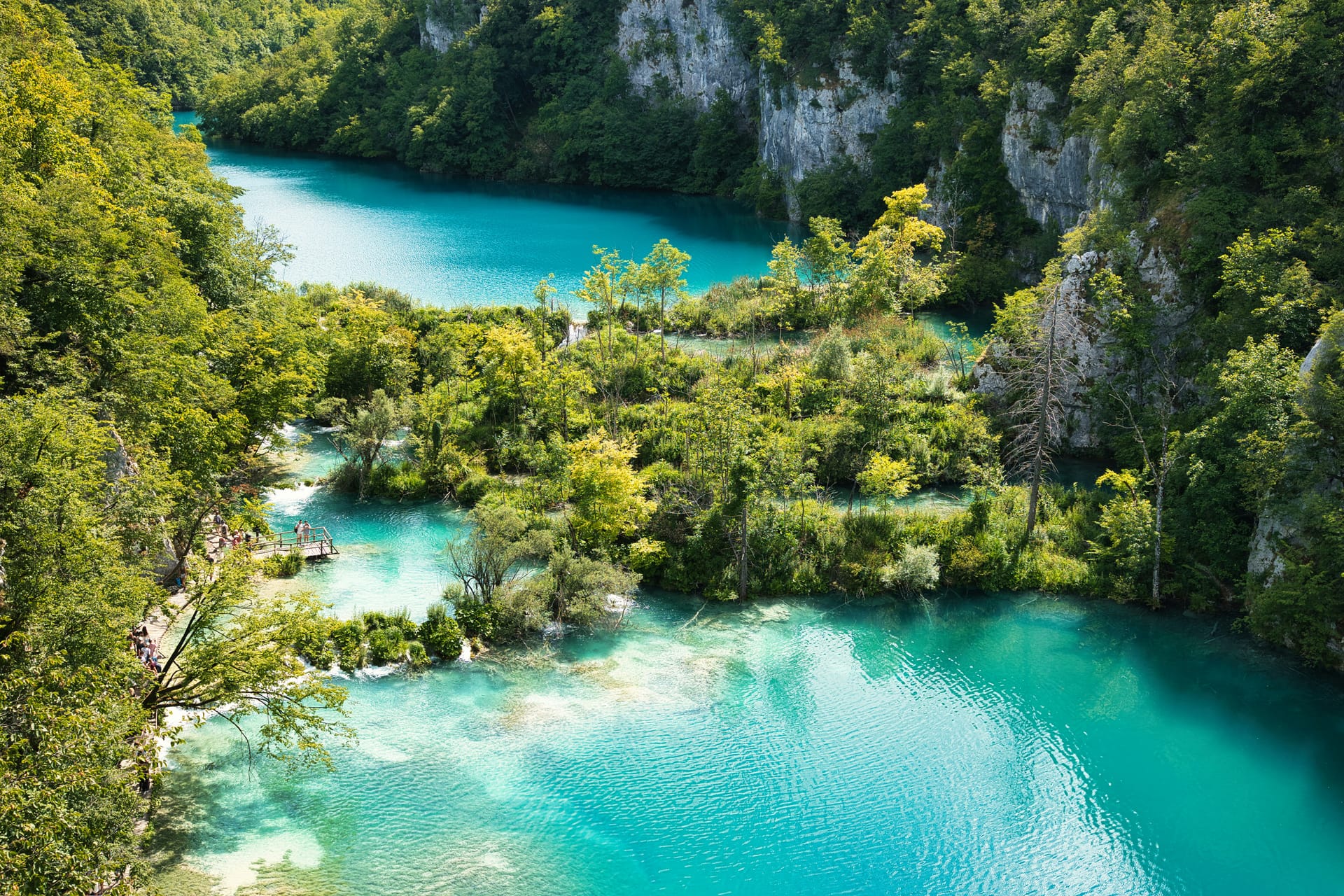
Croatia’s geography is its identity: a crescent-shaped country wrapped around Bosnia and Herzegovina, with one of the most spectacular coastlines in the Mediterranean. The country has 1,777 km of mainland coast and roughly 1,246 islands (only 48 inhabited), producing over 6,200 km of total coastline — more than any other Mediterranean country relative to land area. The water along the Dalmatian coast is some of the clearest in the Mediterranean, due to the limestone karst geology of the surrounding mountains.
Croatia’s modern history is much shorter than its civilisational depth would suggest. The country gained independence from Yugoslavia in 1991 through a brutal four-year war (the Croatian War of Independence, 1991-1995) that left around 20,000 dead and devastated significant portions of the eastern interior. Recovery has been complete: Croatia joined the EU in 2013, the Schengen Area in 2023, and the eurozone in January 2023, making it one of the most rapidly EU-integrated former Yugoslav states.
Tourism has driven much of the recovery. Croatia received around 20 million international visitors in 2023 — over five times the resident population — making the country one of Europe’s most tourist-dependent economies. Filming locations for Game of Thrones (Dubrovnik), Star Wars, and Mamma Mia 2 drove a particular wave of visitor interest in the 2010s.
A Brief History
Early Croatia
Croats settled the territory in the 6th-7th centuries. The medieval Kingdom of Croatia was established in the 10th century. From 1102, Croatia entered into a personal union with Hungary, retaining domestic autonomy.
Habsburg and Venetian
The Croatian territories were divided between Habsburg control (most of the inland and northern coast) and Venetian control (Dalmatia) for centuries. Dubrovnik uniquely existed as the independent Republic of Ragusa from the 14th to 19th centuries — a maritime republic that rivalled Venice as a trading power.
Yugoslavia
After WWI, Croatia became part of the Kingdom of Yugoslavia (1918-1941) then Socialist Federal Republic of Yugoslavia (1945-1991) under Tito. The federation suppressed but never resolved tensions among its constituent republics.
Independence
Croatia declared independence on June 25, 1991. The Croatian War of Independence (1991-1995) against Serb-dominated Yugoslav forces was particularly intense in the eastern Slavonia region (Vukovar’s 87-day siege killed roughly 3,000 people). The 1995 Operation Storm ended the war with Croatian victory and the displacement of approximately 200,000 ethnic Serbs.
Modern Croatia
Croatia joined NATO (2009), the EU (2013), the Schengen Area (January 2023), and the eurozone (January 2023). The country has built a strong service-oriented economy heavily dependent on tourism.
Geography and Climate
Croatia covers 56,594 km² — about twice the size of Belgium — and has three distinct geographic zones: the Pannonian Plain in the northeast, the mountainous interior (the Dinaric Alps), and the Adriatic coast.
Climate
The Adriatic coast has a Mediterranean climate — hot dry summers, mild wet winters. The interior is continental, with hot summers and cold snowy winters.
Culture and Language
Croatian is a South Slavic language, mutually intelligible with Serbian, Bosnian, and Montenegrin (the four were once collectively called Serbo-Croatian during Yugoslav unity; political separation post-1991 has reasserted distinct identities).
Croatia is approximately 80% Catholic.
The Economy
Croatia has a service-dominated economy (~$80 billion GDP in 2024). Tourism contributes roughly 25% of GDP — the highest tourism dependency in the EU after Malta and Cyprus. Other sectors: shipbuilding (Pula, Rijeka, Split shipyards), food processing, pharmaceuticals (Pliva), chemicals (INA — petroleum).
Cuisine
Croatian cuisine reflects regional variety:
- Coastal Dalmatia — fish, octopus salad, peka (slow-cooked meat or octopus under a bell-shaped lid covered with embers), prosciutto (pršut), olive oil
- Continental — sausages, sarma (cabbage rolls), strukli (savoury cheese pastry)
- Istria — truffles (white and black), pasta with wild asparagus, Istrian olive oil
- Wine — Plavac Mali (Dalmatian red), Malvazija (Istrian white)
Nature and UNESCO Sites
Croatia has 10 UNESCO World Heritage Sites, including the Old City of Dubrovnik, Diocletian’s Palace in Split, Plitvice Lakes National Park, the Episcopal Complex of the Euphrasian Basilica in Poreč, and the Stari Grad Plain on Hvar.
Travel Guide
Entry & Best Seasons
Schengen visa-free 90 days. May-June and September-October ideal; July-August is peak season and the coast is extremely crowded.
Transport
Highway A1 connects Zagreb to Split (4 hours); ferries connect mainland to islands. Domestic flights link Zagreb, Split, Dubrovnik, and Pula.
Budget
Mid-range €100-€180; coastal accommodation in summer is significantly more expensive than the interior.
Surprising Facts
- The necktie was invented in 17th-century Croatia — Croatian mercenaries wore distinctive scarves that the French called cravates, leading to the modern necktie.6
- Game of Thrones filmed extensively in Dubrovnik (King’s Landing), Split (Daenerys’s Meereen), and other Croatian locations, generating significant tourism after the show’s 2011-2019 run.3
- Dalmatian dogs — the spotted breed — originated in the Dalmatia region of Croatia.6
- Croatia has the largest functioning truffle in the world on display — a 1.31 kg specimen found in Istria in 1999 (now displayed in a Pula museum).3
- Nikola Tesla was born in 1856 in Smiljan, then in the Austrian Empire, now in Croatia (he is also claimed by Serbia given his ethnic Serb heritage).6
- Croatia has won the FIFA World Cup silver medal (2018) and bronze (2022) — extraordinary results for a country of 3.85 million people.3
Sources and References
See the list of cited sources in the page frontmatter.