The Country of 188,000 Lakes — and the World’s Happiest People (Reportedly)
Finland is, by surface area, 74% forested and 10% covered by lakes — the most-forested country in Europe and home to roughly 188,000 lakes large enough to be officially counted. It is also one of the most sparsely populated countries in the EU (around 18 people per km²) and home to roughly 3.3 million saunas for 5.6 million people, putting Finland’s population-to-sauna ratio at less than 2:1 — the highest in the world by a vast margin.
Finland has been ranked the happiest country in the world by the World Happiness Report for seven consecutive years (2018-2024), a result that puzzles Finns themselves more than anyone — the rankings reflect more about life satisfaction, social trust, and institutional quality than any culturally-recognisable form of cheerful happiness. Finnish culture is famously reserved, comfortable with silence, and resistant to the kind of social warmth that some Mediterranean countries take for granted.
The country has had one of the most dramatic political shifts of any European state in recent years. Finland joined NATO in April 2023, ending 78 years of military non-alignment in direct response to Russia’s invasion of Ukraine. The 1,340-km Finnish-Russian border (the longest EU-Russia border) gives Finland a particular stake in the security architecture being rebuilt across Europe.
A Brief History
Pre-Modern Finland
The territory of modern Finland was settled by Finno-Ugric peoples from the east in prehistoric times — the Finnish language is part of the Uralic family, related to Estonian and (more distantly) Hungarian, and unrelated to Swedish, Norwegian, or any Indo-European language. Finland was largely under Swedish rule from the 13th century to 1809.
Russian Grand Duchy
The Russo-Swedish War of 1808-1809 transferred Finland to the Russian Empire as the autonomous Grand Duchy of Finland, which it remained until independence in 1917 during the Russian Revolution. Finland’s brief but bloody Civil War (January-May 1918) was a victory for the Whites (right-wing nationalists) over the Reds (socialist revolutionaries).
The Winter and Continuation Wars
Finland fought two wars against the Soviet Union — the Winter War (1939-1940) and the Continuation War (1941-1944). The Winter War in particular became a heroic moment in the Finnish national story — a small army holding off Soviet invasion for over three months in brutal subzero conditions before negotiating territorial losses but preserving independence.
Cold War and the EU
Cold War Finland navigated a careful path of military non-alignment while economically integrated with the West. Finland joined the EU in 1995 and adopted the euro in 1999. The 2023 NATO accession ended the long non-alignment policy.
Geography and Climate
Finland covers 338,424 km² — about the size of Germany — making it the EU’s seventh-largest country. The terrain is mostly low hills and lakes; the country has no high mountains.
Climate
Finland’s climate ranges from continental in the south (Helsinki has 21°C average July highs, -4°C average January lows) to subarctic in Lapland (which can drop below -30°C in winter). Lapland experiences polar night (no sunrise) for several weeks in midwinter and midnight sun for several weeks in midsummer.
Culture, Language and Society
The Languages
Finnish is the dominant language (~88% of population) and one of Europe’s most distinctive — agglutinative grammar, fifteen grammatical cases, no gendered pronouns, and a vocabulary unrelated to most surrounding languages. Swedish is the second official language (~5%), spoken in coastal communities and on the Åland Islands.
Religion
Finland is approximately 65% Lutheran (Church of Finland) by formal membership; church attendance is low. About 30% are unaffiliated.
Sisu
The Finnish concept of sisu — best translated as stoic determination, gritty endurance, fighting through adversity — is a cultural touchstone. The word lacks a direct English equivalent and is often invoked to explain Finnish national achievements like the Winter War defence and the post-war economic transformation.
The Economy
Finland has a highly developed economy (~$300 billion GDP in 2024). Key sectors:
- Forestry, paper, and pulp — historically central, with Stora Enso, UPM, and Metsä Group as major global players.
- Telecommunications — Nokia (the former mobile-phone giant, now a major network equipment maker).
- Engineering and machinery — Kone (elevators), Wärtsilä (marine engines), Valmet (paper machinery).
- Gaming — Helsinki has emerged as a global gaming capital. Supercell (Clash of Clans) and Rovio (Angry Birds) are Finnish.
- Steel — Outokumpu, SSAB.
Cuisine
Finnish cuisine reflects forest, lake, and Arctic produce:
- Karjalanpiirakka — Karelian rye pies filled with rice porridge, eaten with egg butter
- Salmon soup (lohikeitto) — creamy salmon and potato soup
- Reindeer (poro) — particularly in Lapland, often as smoked or stewed dishes
- Lakka, mustikka, puolukka — cloudberry, blueberry, lingonberry — wild berries collected during the brief summer
- Korvapuusti — cardamom cinnamon buns
- Mämmi — a dark, dense Easter rye pudding
Nature and UNESCO Sites
Finland has 7 UNESCO World Heritage Sites, including the Old Rauma, the Fortress of Suomenlinna in Helsinki, the Petäjävesi Old Church, and the Verla groundwood and board mill.
Travel Guide
Entry
Schengen visa-free for 90 days for most Western visitors.
Best Seasons
- June-August — midnight sun, lake season, midsummer celebrations
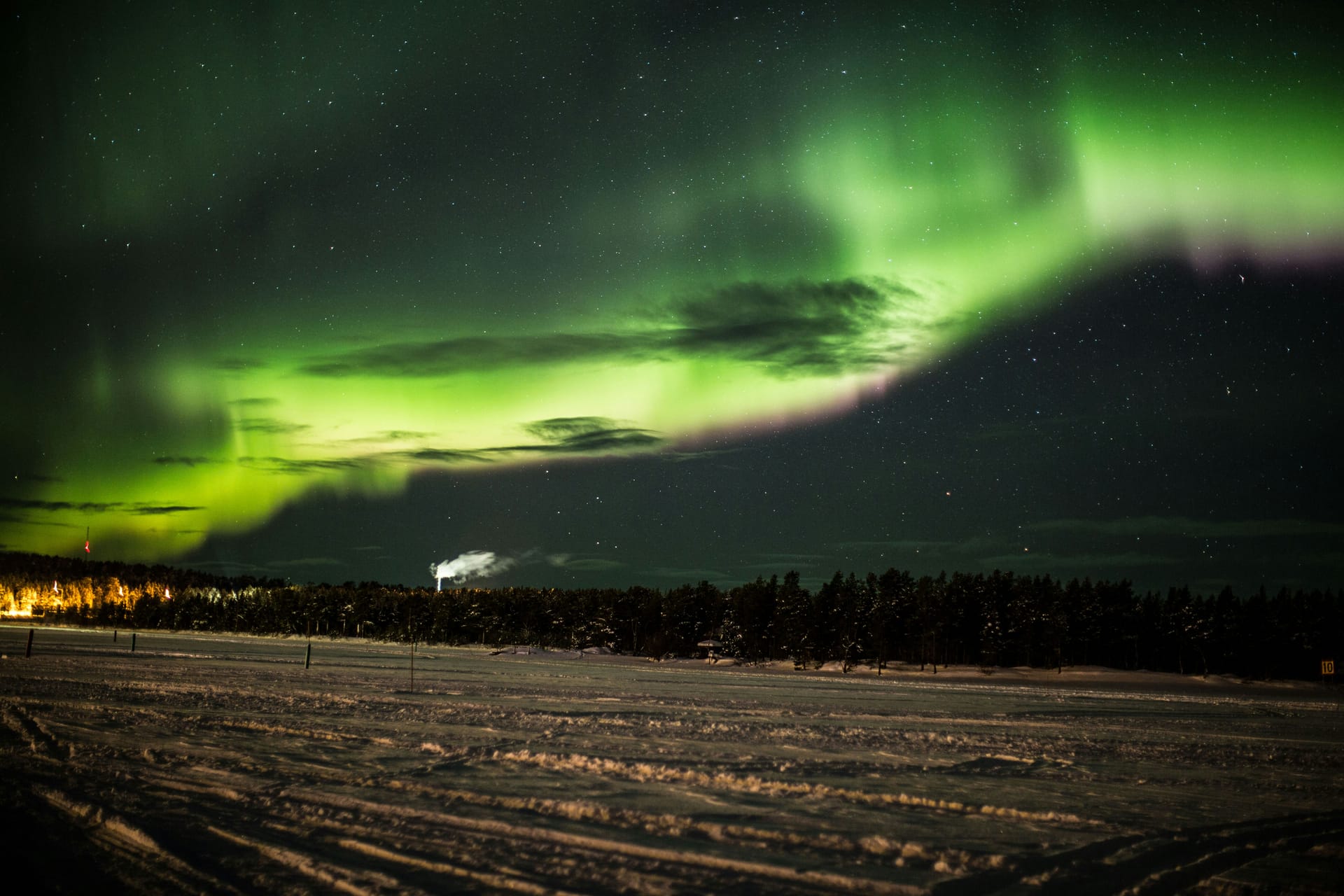
- December-March — Lapland winter season, Santa Claus Village, husky and reindeer sledding, northern lights
- September-October — autumn colours (ruska)
Transport
VR trains connect major cities; Helsinki has a tram and metro network. Allegro trains to St. Petersburg were suspended after Russia’s 2022 invasion of Ukraine.
Surprising Facts
- The official Santa Claus “Joulupukki” is recognised as residing in Korvatunturi, Lapland; the official Santa Claus Village just outside Rovaniemi receives over 600,000 visitors annually.3
- Finland has won the Wife-Carrying World Championships consistently — a competition held annually in Sonkajärvi.6
- The Finnish education system was among the world’s top performers in PISA tests for years — driven by highly trained teachers, no standardised testing in primary school, and short school days.6
- Linux was created by Finnish student Linus Torvalds in 1991 while at the University of Helsinki.6
- Finnish has no future tense — the language uses present-tense verbs with adverbs to indicate future events.6
- Finland was the first European country to grant women full voting rights (1906) and the first in the world to grant women the right to stand for parliament.6
Sources and References
See the list of cited sources in the page frontmatter — UNESCO, World Bank, Visit Finland, Statistics Finland, Bank of Finland, and Encyclopaedia Britannica.