The Country Inside a Country
England is not a sovereign state. It is the largest and most populous of the four constituent countries of the United Kingdom of Great Britain and Northern Ireland — a constitutional arrangement that sometimes confuses visitors but that has shaped everything about how the country is governed, how it sees itself, and how the rest of the world still tends to use “England” and “Britain” interchangeably despite the distinction mattering enormously to the Welsh, Scots, and Northern Irish.
Within that framework, England is the political and economic core of the UK: home to 85% of the UK’s population (56.6 million people), the seat of the UK government, and the location of most of the institutions that still carry global weight — the Crown, Parliament, the Bank of England, the BBC, the Premier League, the world’s oldest universities. Its cultural exports — English as a global lingua franca, the common-law legal tradition, association football, the Industrial Revolution itself — have shaped a disproportionate share of the modern world.
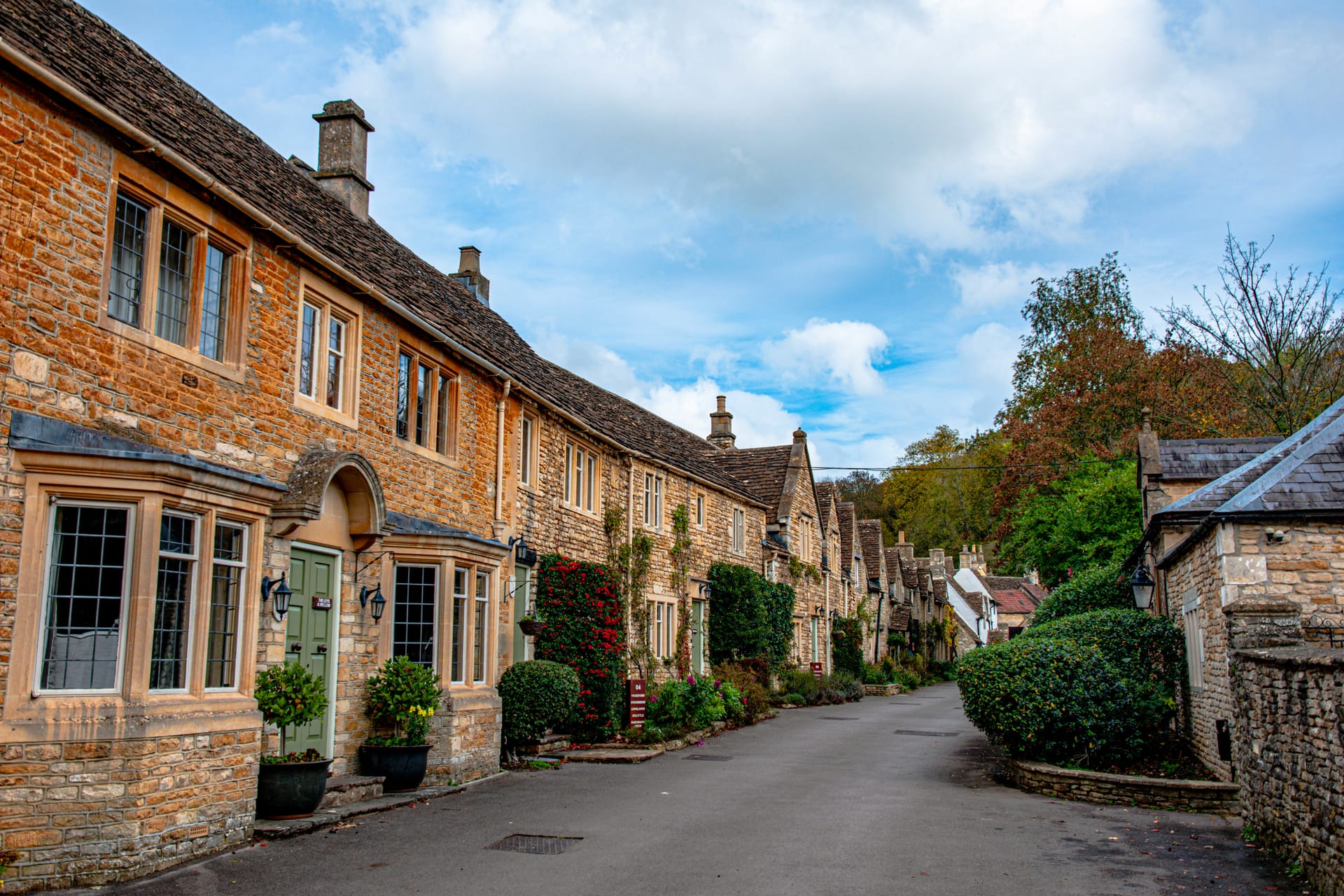
And yet the country that produced globalisation is also an old, provincial country full of villages whose parish churches date from before 1100, of rural pub names that haven’t changed in 300 years, and of a deep attachment to eccentric local institutions that most outsiders underestimate. The visitor who sees only London sees only a fraction of what England is.
A Brief History
Before England
The territory was inhabited by Celtic peoples during the Roman period (43-410 AD), when it formed part of the province of Britannia. Roman withdrawal was followed by the Anglo-Saxon migrations — Germanic peoples from modern Denmark, northern Germany, and the Netherlands who established kingdoms across what is now England. The name “England” derives from “Angles”. The Viking invasions of the 9th and 10th centuries added Scandinavian layers, particularly in the north and east.
The Norman Conquest
William the Conqueror’s victory at the Battle of Hastings in 1066 is the foundational date of modern English statehood. The Norman conquest superimposed a French-speaking aristocracy onto an Anglo-Saxon population, producing the hybrid language that would eventually become modern English and a feudal structure that would underpin English law for centuries. The Domesday Book (1086) — a comprehensive land survey ordered by William — remains one of the most remarkable administrative documents in medieval history.
Medieval and Early Modern England
The medieval period produced Magna Carta (1215) — a charter of liberties extracted from King John by rebel barons, later mythologised as the foundation of constitutional law — and the Hundred Years’ War with France (1337-1453), which ended with England losing all its French territories except Calais. The Wars of the Roses (1455-1487) were an internal dynastic conflict that ended with the Tudor dynasty. Henry VIII’s break with Rome (1534) established the Church of England and permanently altered England’s religious politics.
Empire and Revolution
The English Civil War (1642-1651) led briefly to the abolition of the monarchy and the Cromwellian Commonwealth; the monarchy was restored in 1660, and the Glorious Revolution of 1688 produced the Bill of Rights and the beginnings of constitutional monarchy. The Act of Union with Scotland (1707) created the Kingdom of Great Britain.
The 18th and 19th centuries transformed Britain into the world’s first industrial economy and, by 1900, the largest empire in history — covering 25% of the world’s land area and 25% of its population. The Industrial Revolution — beginning in Lancashire and Yorkshire in the mid-18th century — reshaped not just Britain but the structure of the global economy.
The Twentieth Century
Two world wars ended Britain’s position as the world’s dominant power but preserved its core constitutional structure. Decolonisation (1947-1980) dismantled the empire, mostly peacefully; EU membership (1973-2020) integrated Britain into European markets; Brexit (2016-2020) withdrew it again, with consequences still being worked out in 2026.
Geography and Climate
England covers 130,279 km² — about the size of Greece or Louisiana — and occupies the southern two-thirds of the island of Great Britain. It borders Scotland to the north and Wales to the west.
Regional Geography
- The South East — London and the surrounding counties (Kent, Surrey, Sussex). Flatter, wealthier, most densely populated. The Channel coast has the white cliffs at Dover and Beachy Head.
- The South West — Devon, Cornwall, Dorset, Somerset. The Cotswolds, Dartmoor, the Jurassic Coast, and surfing beaches at Newquay and Polzeath.
- East Anglia — Norfolk, Suffolk, Cambridgeshire, Essex. Flat, agricultural, with the Norfolk Broads wetlands and Cambridge University.
- The Midlands — Birmingham, Leicester, Nottingham. The industrial heartland, now post-industrial.
- The North West — Liverpool, Manchester, the Lake District. Birthplace of the Industrial Revolution and of rock music (The Beatles).
- The North East — Newcastle, Durham, the Yorkshire Dales and North York Moors. Historically coal-mining country, now one of England’s less economically developed regions.
Climate
England has a maritime temperate climate — cool, damp, and cloudy more often than the stereotype suggests. London receives around 600 mm of rain annually (less than Paris). Summer temperatures rarely exceed 28°C outside recent heatwaves; winter temperatures rarely drop below -5°C in the lowlands. Snow is infrequent in most of the country and can bring transport to a halt when it does arrive.
Culture, Language and Society
Class and Regional Identity
English culture is shaped by two cross-cutting axes that visitors often underestimate: social class and regional identity. Class markers — accent, school background, how one pronounces “bath” and “grass” — remain socially legible in ways that most other Western cultures find curious. Regional identities — North vs South, London vs everywhere else, Yorkshire vs Lancashire, the “North-South divide” — shape political attitudes, cuisine, and urban culture.
London
London is a city-state in most ways that matter economically. It generates roughly 23% of UK GDP despite having only 13% of the population. It is the world’s most visited city by international arrivals (19.8 million in 2023), hosts the world’s largest financial market alongside New York, and contains a population born outside the UK that exceeds 40% — one of the most immigrant-rich capital cities globally.
The Universities
Oxford (founded c. 1096) and Cambridge (founded 1209) are two of the world’s oldest continuously operating universities. Between them they have produced 187 Nobel laureates, shaped British political elites for nine centuries, and developed the college-based “Oxbridge” educational model that many global universities have adapted.
Popular Culture
English cultural exports of the 20th and 21st centuries have been extraordinary relative to the country’s size: The Beatles, the Rolling Stones, David Bowie, Led Zeppelin, Pink Floyd, Queen, Oasis. Shakespeare. The Harry Potter novels (Joanne Rowling is Scottish but the books are set in England). The Premier League, by far the world’s most-watched football competition. Doctor Who, Sherlock Holmes, James Bond. The English have, for reasons difficult to isolate, produced a disproportionate share of the 20th and 21st century’s globally recognised fictional characters.
The Economy
The United Kingdom’s economy is the world’s sixth-largest (~$3.5 trillion GDP in 2024), with England accounting for roughly 85% of UK economic output. London alone, if counted separately, would be the world’s 21st-largest economy.
Key Sectors
- Financial services — the City of London remains one of the two leading global financial centres (with New York). Insurance (Lloyd’s), asset management, foreign exchange (roughly 37% of global FX turnover passes through London), and fintech.
- Professional services — law (four of the top ten global law firms are English), accounting, consulting.
- Creative industries — television (BBC, ITV, Channel 4), film (Pinewood and Shepperton studios host large US film productions), publishing (English-language trade publishing centres), fashion, advertising, video games.
- Higher education — UK universities earn roughly £30 billion annually from international students; education is one of the UK’s largest service exports.
- Manufacturing — more diversified than stereotypes suggest: aerospace (Rolls-Royce engines, BAE Systems), pharmaceuticals (GlaxoSmithKline, AstraZeneca), automotive (Jaguar Land Rover, Mini, Bentley, Rolls-Royce Motor Cars, Aston Martin), defence.
- Energy — North Sea oil and gas (declining); growing renewable sector (UK is a world leader in offshore wind).
Post-Brexit
The UK’s departure from the EU in 2020 has reshaped trade patterns — goods trade with the EU has grown more slowly than global trends; services trade has proved more resilient. The economic consequences remain contested politically, though most independent economists estimate Brexit has reduced UK GDP by 2-4% relative to a counterfactual remain scenario.
Cuisine
English food has historically had one of the worst international reputations of any major cuisine — a reputation that was partly deserved in the mid-20th century (when rationing and industrial food production degraded traditional cooking) and is largely outdated today. Contemporary English food, especially in London and the major cities, is as varied and high-quality as any in Western Europe.
Traditional English Food
- Sunday roast — roast beef, Yorkshire pudding, roast potatoes, seasonal vegetables, gravy, and horseradish (with beef) or mint sauce (with lamb). The weekly ritual that defines English home cooking.
- Full English breakfast — bacon, eggs, sausages, baked beans, black pudding, fried tomatoes, mushrooms, toast. A colossal breakfast that originated in the 19th century and remains a cultural institution.
- Fish and chips — battered white fish (usually cod or haddock) with thick-cut fried potatoes. Originated as working-class food in the 1860s; now represents roughly 10,500 chip shops across the country.
- Afternoon tea — sandwiches, scones with clotted cream and jam, small cakes. A 19th-century invention of Anna, Duchess of Bedford, who wanted a snack between lunch and dinner.
- Sunday pie traditions — steak and kidney, shepherd’s pie (lamb), cottage pie (beef), fish pie, pork pie (cold).
The Immigrant Influence
Indian cuisine is so embedded in English food culture that “chicken tikka masala” has been declared a British national dish (it was apparently invented in Glasgow in the 1970s for customers who wanted gravy on their tandoori chicken). Britain has the densest concentration of Indian restaurants per capita of any non-Indian country. Chinese, Italian, Turkish, Caribbean, Middle Eastern, and more recently Vietnamese and Korean immigrant cuisines are well established.
The London Restaurant Scene
London has 75+ Michelin-starred restaurants and is widely regarded as one of the world’s top 3 dining cities, along with Paris and Tokyo. Restaurants like The Ledbury, Core by Clare Smyth, Restaurant Gordon Ramsay, and Sketch operate at the highest international level.
Nature and UNESCO Sites
The UK has 33 UNESCO World Heritage Sites (including Scotland, Wales, and Northern Ireland); English highlights include:
- Stonehenge, Avebury and Associated Sites — Neolithic monuments dating from 3000-2000 BC
- City of Bath — Roman baths and Georgian terraces
- Tower of London — Norman fortress, prison, and royal regalia repository
- Westminster Palace, Westminster Abbey, Saint Margaret’s Church — the seat of Parliament plus the royal coronation church
- Canterbury Cathedral, St Augustine’s Abbey and St Martin’s Church — the mother church of the Anglican Communion
- Maritime Greenwich — the Royal Observatory, the Cutty Sark, the National Maritime Museum
- Durham Castle and Cathedral — the finest Norman architecture in England
- Fountains Abbey and Studley Royal — ruined Cistercian monastery and landscape garden
National Parks and AONBs
England has 10 national parks covering roughly 8% of the country, plus 33 Areas of Outstanding Natural Beauty (AONBs). The Lake District (UNESCO-listed for cultural landscape), Dartmoor, Exmoor, the Peak District, the Yorkshire Dales, the Norfolk Broads, and the New Forest are all accessible weekend destinations from most English cities.
Travel Guide: Practical Information
Entry
Post-Brexit, the UK is no longer part of the Schengen Area. Citizens of the US, Canada, Australia, Japan, EU countries, and many others can enter for up to 6 months visa-free. From 2025, visa-exempt travellers need an ETA (Electronic Travel Authorisation) — £10, valid for 2 years, similar to the US ESTA.
Best Seasons
- May-September — the most reliable weather window. Long daylight hours (summer solstice gives 17+ hours of daylight in northern England).
- December — Christmas in London is atmospheric; markets across the country.
- Avoid late autumn and winter if you want reliable sunshine, though early spring (March-April) can have beautiful clear days.
Transport
- London Underground — one of the world’s oldest metros (opened 1863). The network is extensive but expensive by European standards; an Oyster card or contactless payment is essential.
- National Rail — operated by multiple private companies since privatisation in 1994. London-Edinburgh in 4h20; London-Manchester in 2h10; London-Paris in 2h15 (via Eurostar). Book well in advance for best prices.
- Driving — if you’re not used to driving on the left, stick to trains and buses in England. Rural roads in Cornwall and the Cotswolds are narrow.
- Coaches (intercity buses) — National Express and Megabus offer cheap alternatives to rail.
Budget
England is expensive. London is among the world’s top 5 priciest capitals for hotels and dining. A mid-range daily budget is £150-£250 for London, £100-£180 elsewhere. Outside London, pub meals and B&Bs offer reasonable value.
Surprising Facts
- The UK has no codified constitution — its constitutional order rests on accumulated laws, conventions, and court decisions, making it one of only three countries (with Israel and New Zealand) without a single foundational document.7
- English place-names with “-chester” or “-caster” (Manchester, Doncaster, Chester) mark the sites of former Roman forts — from the Latin castra.7
- The Bank of England was founded in 1694, making it one of the world’s oldest central banks. It held the monopoly on issuing banknotes in England and Wales since 1844.5
- All swans on open waters in England technically belong to the monarch; the annual “Swan Upping” ceremony on the River Thames surveys and marks the royal swans each July.7
- Cambridge University’s Trinity College has more Nobel laureates than all but three countries.7
- The London Underground was the world’s first underground railway (opened 1863) and remains the oldest in continuous operation; the network includes several abandoned “ghost stations” occasionally used for filming.7
Sources and References
See the list of cited sources in the page frontmatter — UNESCO World Heritage Centre, World Bank, VisitBritain, Office for National Statistics, Bank of England, British Museum, and Encyclopaedia Britannica.