Seven Thousand Years of Continuity Along a Single River
Egypt is, among other things, the oldest continuously documented civilisation on earth. The first unified Egyptian state was formed around 3100 BC under the legendary king Narmer, who combined Upper and Lower Egypt into a single political entity that would persist — through dynasties, foreign conquests, and religious transformations — for over 3,000 years of pharaonic rule and another 2,000 years of post-pharaonic continuity. No other civilisation on earth has remained in roughly the same geographic territory, speaking a language descended from its own ancient tongue, under a recognisable national identity for this long.
The Nile River is the reason. Herodotus called Egypt “the gift of the Nile” in the 5th century BC; the observation remains geographically accurate 2,500 years later. Roughly 95% of Egypt’s 114 million people live on the 4-5% of the country’s land that touches the Nile or its delta. The rest of the country is desert — the Western Desert (part of the Sahara), the Eastern Desert running to the Red Sea, and the Sinai Peninsula. This extreme concentration — one of the highest population densities of inhabited land in the world — has shaped everything about how Egypt has organised itself politically, agriculturally, and culturally for seven millennia.
A Brief History
Pharaonic Egypt
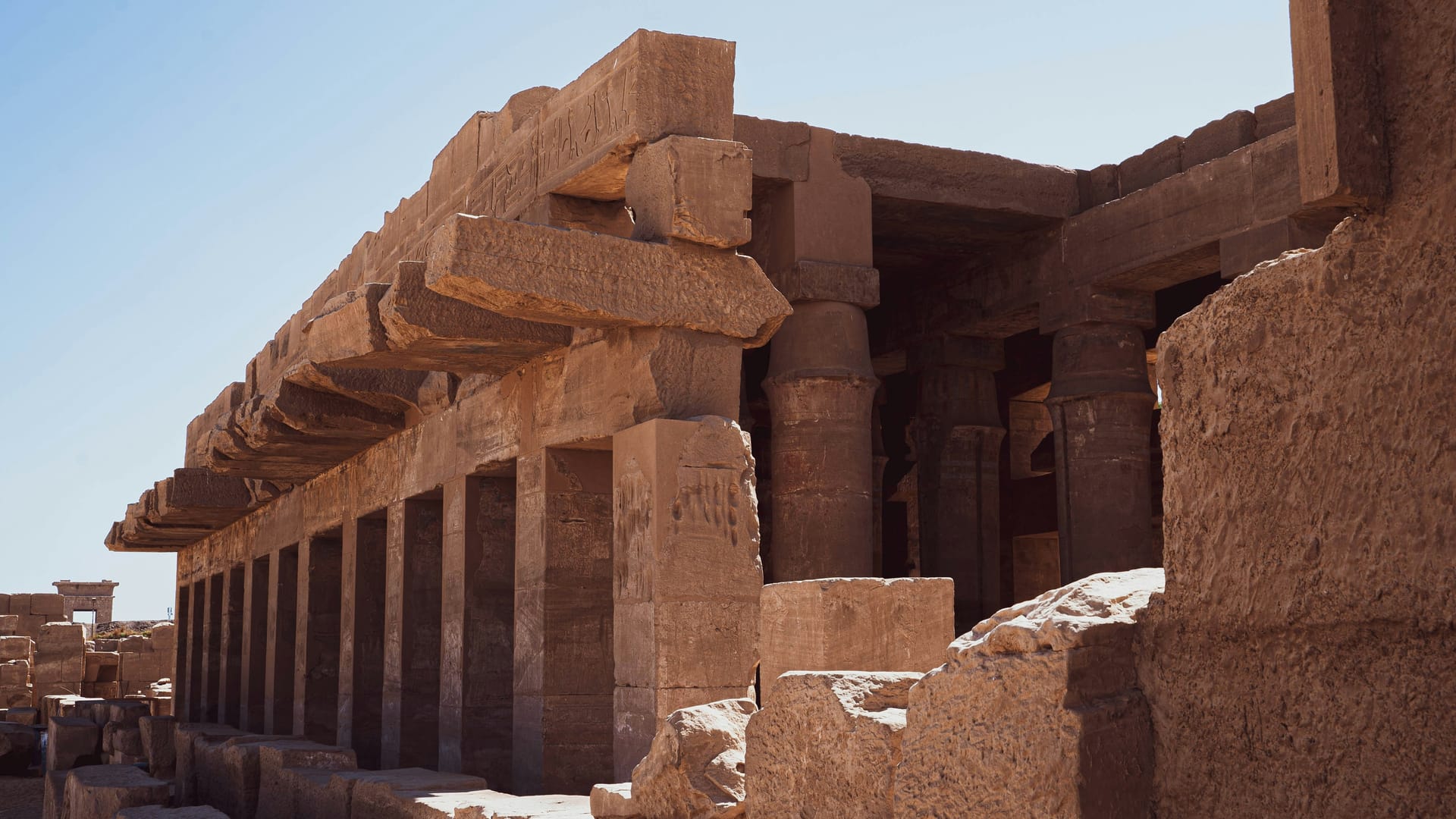
Ancient Egyptian history is conventionally divided into 30 dynasties across three “kingdom” periods, each separated by “intermediate periods” of political fragmentation. The Old Kingdom (c. 2686-2181 BC) built the Giza pyramids. The Middle Kingdom (c. 2055-1650 BC) produced classical Egyptian literature. The New Kingdom (c. 1550-1069 BC) was the empire’s peak — Pharaohs Hatshepsut, Thutmose III, Akhenaten, Tutankhamun, and Ramesses II all ruled in this era, expanding Egyptian influence from Nubia to modern Syria.
Ancient Egypt’s distinctiveness — the monumental tomb architecture, the mummification practices, the hieroglyphic writing, the pantheon of gods — rested on a death-focused religious system that understood mortality as a transition rather than an ending, and built the richest material-culture record of any ancient civilisation in the service of that belief.
Foreign Conquest and Hellenistic Egypt
The Persian conquest of 525 BC ended Egyptian independence. Alexander the Great’s arrival in 332 BC established Greek rule; his general Ptolemy founded the Ptolemaic Dynasty (305-30 BC), culminating in Cleopatra VII — whose suicide in 30 BC marked the Roman annexation of Egypt. Egypt became Rome’s breadbasket for 400 years.
Islamic Egypt
The Arab conquest of 641 AD brought Islam and Arabic to Egypt, gradually displacing earlier Coptic Christian and late pharaonic cultural layers. Cairo was founded in 969 AD by the Fatimid Caliphate and grew into one of the medieval Islamic world’s largest and most learned cities. Al-Azhar University, founded in 970 AD, remains one of the world’s oldest continuously operating universities and the central institution of Sunni Islamic scholarship.
Mamluk and Ottoman Egypt
The Mamluks — originally enslaved Turkic and Circassian soldiers who took power — ruled Egypt from 1250 to 1517. The Ottoman conquest of 1517 incorporated Egypt into the Ottoman Empire, though the Mamluk bey system continued to wield local power. Napoleon’s 1798 invasion brought European contact; it also brought the Rosetta Stone’s discovery, which enabled Jean-François Champollion to decipher hieroglyphs in 1822.
Modern Egypt
Muhammad Ali — an Albanian-born Ottoman officer who seized power in 1805 — began Egypt’s modernisation with French and British assistance; his dynasty ruled until 1953. British imperial control tightened progressively from the 1880s, especially after the Suez Canal opened in 1869.
The 1952 Free Officers coup led by Gamal Abdel Nasser established the Egyptian Republic and launched an era of Arab nationalism. Nasser nationalised the Suez Canal in 1956 (triggering the Suez Crisis), led Arab unity efforts, and became one of the defining political figures of the mid-20th century Arab world.
Anwar Sadat (president 1970-1981) reversed many of Nasser’s policies, opening the economy and making peace with Israel in the 1978 Camp David Accords (for which he was assassinated in 1981). Hosni Mubarak ruled from 1981 to 2011, when the Arab Spring protests forced him from power. Brief rule by the Muslim Brotherhood under Mohamed Morsi (2012-2013) was followed by a 2013 military coup that brought current President Abdel Fattah al-Sisi to power.
Geography and Climate
Egypt covers 1,001,449 km² — about the size of Texas plus New Mexico — but with essentially all population and economic activity concentrated along the Nile Valley and Nile Delta. The country straddles the boundary between Africa and Asia via the Sinai Peninsula.
Regional Geography
- The Nile Valley — the narrow green strip from Aswan to Cairo, roughly 800 km long and 15-40 km wide.
- The Nile Delta — the fan-shaped plain from Cairo to the Mediterranean, Egypt’s agricultural heartland.
- The Western Desert — the Egyptian Sahara, covering roughly two-thirds of the country. Contains several major oases (Siwa, Bahariya, Farafra, Dakhla, Kharga).
- The Eastern Desert — rocky mountain country between the Nile and the Red Sea.
- The Sinai Peninsula — mountainous, Bedouin-inhabited, bordered by Israel to the east and the Gulf of Suez/Red Sea.
- The Red Sea Coast — resort towns (Hurghada, Sharm el-Sheikh, Marsa Alam) with some of the world’s best coral reef diving.
Climate
Egypt has a desert climate — hot and dry almost everywhere. Summer temperatures reach 40°C+ in the south (Luxor, Aswan) and 30-35°C in Cairo. Winter is pleasant (20-25°C daytime). Rainfall is negligible — Cairo receives around 25 mm annually. The Khamsin — hot, dust-laden winds from the Sahara — blows in April and May.
Culture, Language and Religion
The Language
Arabic is the official language. Egyptian Arabic (Masri) — the dialect spoken in the Nile Valley — is the most widely understood Arabic variety in the Arab world, largely because of the dominance of Egyptian television, cinema, and music. Most Egyptian Arabs can follow Egyptian TV shows with far greater ease than Saudi, Moroccan, or Iraqi dialects.
The Coptic language — the last form of ancient Egyptian, written in a Greek-derived alphabet — survives only as a liturgical language in Coptic Christian churches.
Religion
Egypt is approximately 90% Sunni Muslim and 10% Christian (predominantly Coptic Orthodox, with smaller Coptic Catholic, Greek Orthodox, and Protestant communities). The Coptic Orthodox Church is one of the oldest continuous Christian traditions in the world, tracing its foundation to Saint Mark the Evangelist around 42 AD.
Religious identity is legally recorded on Egyptian ID cards and shapes significant aspects of civil law, particularly marriage and inheritance. Tensions between Muslim and Christian communities have flared periodically, and Coptic Christians have been the targets of terrorist attacks.
The Cultural Scene
Cairo was the Hollywood of the Arab world throughout the 20th century — the centre of Arab cinema, Arab music (Umm Kulthum, Mohammed Abdel Wahab, Abdel Halim Hafez), and Arab publishing. The city’s cultural influence has declined since the 1990s as Gulf broadcasters and streaming platforms have taken market share, but Egyptian literature — Naguib Mahfouz won the Nobel Prize in 1988 — and soap operas still reach wider regional audiences than those of any other Arab country.
Family and Society
Egyptian society remains family-centred, with extended-family networks playing a significant role in social and economic support. Hospitality is a cultural point of pride; refusing offered food, tea, or coffee can be socially awkward. Gender roles are changing but remain more traditional than in most Western countries.
The Economy
Egypt has the second-largest economy in Africa (~$400 billion GDP in 2024) after South Africa and is the most populous Arab country. The economy is diverse by regional standards, with agriculture, industry, services, tourism, and remittances all contributing significantly.
Key Sectors
- Tourism — one of the most important foreign-exchange earners. Egypt received around 15 million international visitors in 2023, generating roughly $15 billion in tourism revenue. The sector is highly sensitive to political disruption (dropping sharply after 2011 and 2013) and terrorist incidents.
- Suez Canal — transit fees generate around $9 billion annually (pre-2024; disrupted by Red Sea Houthi attacks reducing shipping traffic). The canal handles roughly 12% of world trade.
- Agriculture — Egypt is a major exporter of cotton (historically the economic mainstay) and a significant producer of rice, wheat, citrus, and vegetables. The Nile Valley and Delta are among the most productive agricultural regions on earth.
- Natural gas — large eastern Mediterranean gas discoveries have made Egypt an energy exporter again.
- Remittances — Egyptian workers in the Gulf (Saudi Arabia, UAE, Kuwait) send home around $30 billion annually, among the world’s largest remittance flows.
Recent Economic Crisis
Egypt has been in sustained economic difficulty since 2022 — currency devaluations (the pound lost roughly 60% of its value against the US dollar in 2022-2024), inflation spikes (above 35% at peak), and repeated IMF bailout programmes. Public debt exceeds 95% of GDP. The massive infrastructure projects of the Sisi government (the New Administrative Capital east of Cairo, a new high-speed rail network, the expanded Suez Canal) have contributed to debt accumulation but also to longer-term infrastructure upgrades.
Cuisine
Egyptian food is sturdy, bean-and-grain-based, and underrepresented internationally relative to its quality. The country’s street food tradition is particularly strong, with inexpensive meals available everywhere.
Iconic Dishes
- Ful medames — slow-cooked fava beans with olive oil, lemon, cumin, and garlic. The national breakfast dish, eaten with Egyptian flatbread (aish baladi).
- Koshari — Egypt’s unofficial national dish. Rice, lentils, pasta, chickpeas, crispy fried onions, and a tangy tomato sauce. Street-food ubiquity.
- Ta’ameya — Egyptian falafel made with fava beans (not chickpeas, as in the Levantine version).
- Molokhia — a thick, slightly slippery soup made from jute leaves, traditionally served with rabbit or chicken and rice.
- Fatta — rice, bread, meat, and a garlic-vinegar sauce, served at celebrations.
- Mahshi — stuffed vegetables (cabbage leaves, vine leaves, peppers, zucchini) with rice and herbs.
- Hamam mahshi — stuffed pigeon, a festive dish.
- Egyptian breakfast — at a restaurant, this typically includes ful, ta’ameya, boiled eggs, pickled vegetables, halloumi-style cheese, and aish baladi.
Sweets
Egyptian sweets are Levantine in influence: basbousa (semolina cake soaked in syrup), konafa (shredded pastry with cheese or cream), om ali (bread pudding with milk, raisins, and nuts), and umm ali’s many variants.
Nature and UNESCO Sites
Egypt has 7 UNESCO World Heritage Sites, almost all cultural:
- Memphis and its Necropolis — the Pyramid Fields from Giza to Dahshur — the full sequence of pyramid-building from the Step Pyramid of Djoser (2650 BC) through the Giza complex to the later pyramids of Dahshur.
- Ancient Thebes with its Necropolis — Luxor and Karnak temples, the Valley of the Kings, Deir el-Bahari (Hatshepsut’s temple).
- Nubian Monuments from Abu Simbel to Philae — including the massive UNESCO-led Aswan relocation project that moved Abu Simbel temples block-by-block to higher ground in the 1960s to save them from the Aswan Dam’s reservoir.
- Saint Catherine Area — the Sinai monastery, one of the oldest continuously functioning Christian monasteries in the world (founded 548 AD).
- Abu Mena — early Christian pilgrimage site in the Western Desert.
- Historic Cairo — the medieval Islamic city around Khan el-Khalili.
- Wadi Al-Hitan (Whale Valley) — a fossil site in the Fayoum, showing the evolutionary transition from whales’ land-dwelling ancestors to modern whales.
Red Sea
Egypt’s Red Sea coast is one of the world’s best coral reef destinations — reefs that are still largely healthy compared to much of the world’s bleached systems. Ras Muhammad National Park at the southern tip of Sinai, and the waters off Marsa Alam and Dahab, offer world-class diving.
Travel Guide: Practical Information
Entry
Most visitors can obtain a tourist visa on arrival at Egyptian airports for $25, or apply online via the e-Visa portal before travel. Visas are valid for 30 days and can be extended. Carry both your passport and a printed copy of the visa.
Best Seasons
- October-April — the ideal window. Cool enough for Luxor, Aswan, and the Western Desert; pleasant in Cairo; excellent for Red Sea diving.
- March-April and October-November — peak shoulder-season value. Some of the best weather across the country, before or after the main winter tourist high.
- May-September — very hot, especially in Upper Egypt (Luxor, Aswan routinely 40°C+ in July-August). Red Sea resorts remain feasible.
Transport
- Domestic flights — EgyptAir covers Cairo-Luxor, Cairo-Aswan, Cairo-Sharm el-Sheikh, Cairo-Hurghada in about an hour each.
- Sleeper trains — the overnight Cairo-Luxor and Cairo-Aswan services (Watania and ENR) are a travel institution, comfortable and efficient.
- Nile cruises — the 3-4 day Luxor-Aswan cruise (or 7 day Luxor-Aswan-Luxor) remains one of the great travel experiences; dozens of operators at varying price points.
- Cairo transit — the Cairo Metro has three lines and a new fourth under construction; it is the fastest way to move across the city.
- Driving — strongly not recommended for visitors. Hire a driver or use Uber/Careem (both operate in Cairo and Alexandria).
Safety
Tourist-zone security is intensive — Egypt has been actively protecting its tourism sector since terrorist attacks in the 1990s and 2000s. Cairo, Luxor, Aswan, and the Red Sea resorts are heavily policed and generally safe for visitors. The Sinai Peninsula’s interior (north Sinai) has an active Islamic State insurgency and is off-limits; the southern Sinai beach resorts are safe. Overall visitor crime is rare; scams and aggressive tout pressure at tourist sites are more common problems than serious safety issues.
Budget
Egypt is inexpensive for Western visitors, especially after the 2022-2024 currency devaluations. Mid-range budgets of $50-$100 per day are comfortable. Tipping (baksheesh) is expected for small services everywhere — budget Rs 20-50 EGP for porters, bathroom attendants, and minor helpers; 10-15% in restaurants.
Cultural Etiquette
- Dress modestly at religious sites and outside resort areas — shoulders and knees covered for both genders. Shoes off at mosques.
- Ramadan (dates shift each year — use current calendar) affects restaurant hours significantly; most establishments close during daylight hours, but resorts and upscale hotels continue service.
- Photography — avoid photographing military installations, bridges, and many government buildings. Asking before photographing people, especially women, is polite.
Surprising Facts
- The oldest dress in the world is a linen garment found at Tarkhan, Egypt, dated to around 3500 BC, displayed at the Petrie Museum in London.6
- Egypt has no rain across most of its territory — some parts of Upper Egypt receive less than 1 mm annually, putting them among the driest places on earth.6
- Cleopatra VII — the famous last pharaoh of Egypt — was of Macedonian Greek descent, not Egyptian. She was the first Ptolemaic ruler to actually learn the Egyptian language in 300 years of dynasty.6
- The Great Sphinx is carved from a single limestone outcrop and lost its nose centuries ago — possibly damaged in the 14th century by a Sufi zealot offended by local people making offerings to it, though the story is contested.6
- Egyptian honey production dates back at least 4,500 years — honeycomb residue and beekeeping scenes appear in Old Kingdom tomb art, and honey was used in medicine, religious offerings, and mummification.6
- The Suez Canal shortens the shipping route from Europe to India by around 7,000 km compared to the Cape of Good Hope route; its 2015 expansion doubled daily transit capacity.6
Sources and References
See the list of cited sources in the page frontmatter — UNESCO, World Bank, Egyptian Tourism Authority, CAPMAS, Ministry of Tourism and Antiquities, Encyclopaedia Britannica, and the Central Bank of Egypt.